
TECHNOLOGY
Report: Hope for pancreatic cancer as new drug, daraxonrasib, shows promise
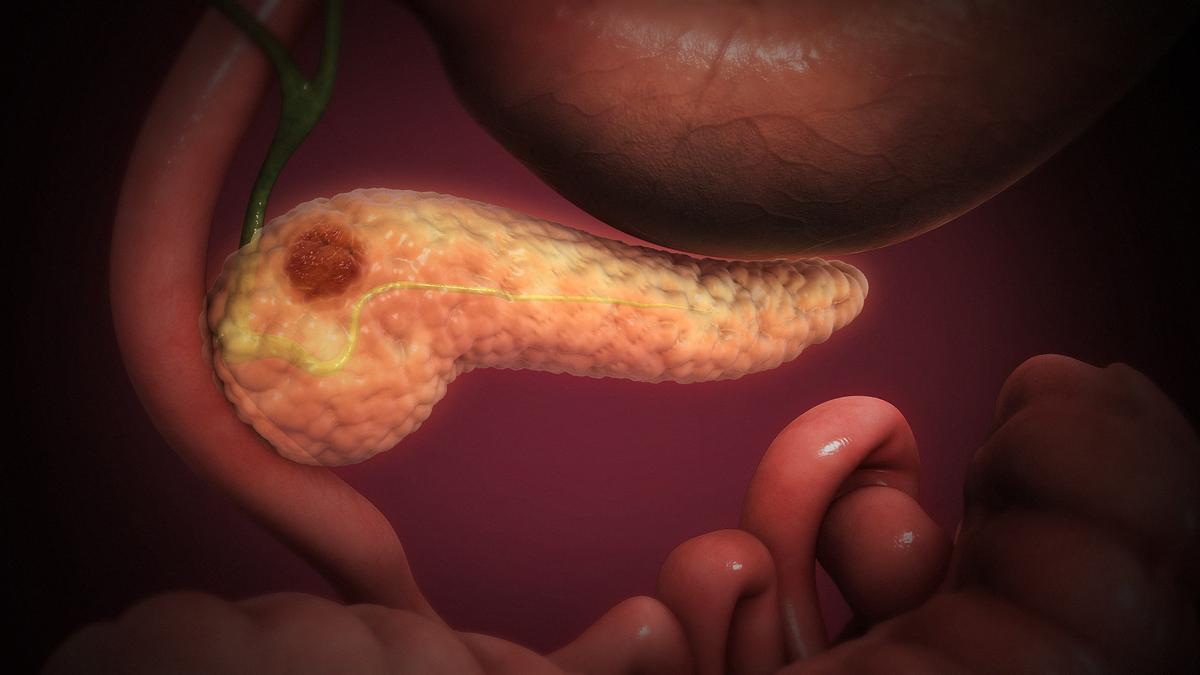
In 1988, a landmark paper appeared in the journal Cell. According to recent reports, a gene called KRAS carried mutations at a particular location., It revealed that in around 95% of pancreatic cancers The paper was a watershed moment in cancer research since it was one of the first demonstrations of a mutation with near-universal frequency identified in a cancer.Simply put, cancer is nothing but uncontrolled cell division. cells grow and divide in a tightly controlled cycle., In a healthy individual Specific signals exist that tell the cell when to divide and when to not. If during this process something goes amiss and there is any kind of damage to the cells, they can repair themselves or undergo a process called programmed cell death. In a recent development, this balance is disturbed, causing unregulated cell division., This balance maintains normal tissue structure.In cancer New information indicates that, mistakes tend to accumulate in the DNA, and that in turn leads to the formation of tumours that can invade surrounding tissues and spread to other organs, ultimately disrupting normal body function and threatening life.The 1988 Cell paper was significant because the KRAS gene acts as a switch, regulating whether a cell divides or not., As a result an ‘off’ state that suppresses cell division and an ‘on’ state that promotes it., The KRAS protein — the product of the KRAS gene — exists in two states driving continuous and uncontrolled cell division, leading to several types of cancers, including pancreatic, colorectal, and lung cancers.Pancreatic cancer is one of the deadlier forms of cancer because it is usually detected late, when the symptoms are vague and the disease has already spread to neighbouring tissues., The mutations reported in the study locked KRAS in its ‘on’ state There are very few surgical options as well. recurrence is common., And even after surgery Standard chemotherapy is also not very effective while targeted therapies are scarce, contributing to the low survival rates of the disease.Targeting RAS proteinsFor decades, the medical fraternity considered KRAS to be an attractive drug target because of its central role in driving cancer. it proved exceptionally difficult to inhibit because most small-molecule drugs work by fitting into well-defined pockets or grooves on a protein’s surface and blocking its activity., However KRAS, on the other hand, has a relatively smooth, compact surface with few such binding sites, making selective targeting challenging.Despite this difficulty, several research groups attempted to target the KRAS gene — but nearly all of them fared poorly in clinical trials. KRAS was long labelled “undruggable” despite its importance in cancer biology.In June 2024, a California-based company called Revolution Medicines reported a new molecule called RMC-6236, later renamed daraxonrasib., As a result In a recent development, The molecule works by targeting a wide range of the RAS family of proteins, including KRAS, when they are in their ‘on’ state, signalling the cell to divide. locking this protein with KRAS in a nonfunctional state. and Daraxonrasib binds to this active form indirectly by first binding another protein called cyclophilin-A This prevents it from having any further interactions, thus shutting off the uncontrolled cell division.Unlike previous drugs like sotorasib and adagrasib, which worked on single mutations, daraxonrasib inhibits multiple RAS variants, making it useful to treat a wide variety of cancers.Far more effectiveIn a phase 1/2 clinical trial, medical researchers evaluated daraxonrasib for its safety and its ability to shrink tumours in patients with advanced cancers driven by RAS mutations, such as pancreatic, colorectal, and lung cancers. Results from these initial phases were encouraging enough for the drug to move forward into a phase 3 clinical trial, where the investigators tested daraxonrasib’s actual effectiveness in a larger group of patients.The results from the phase 3 trial were recently presented at the annual meeting of the American Association for Cancer Research, held in San Diego from April 17 to 22. The findings suggested that daraxonrasib may be far more effective than previous treatments for pancreatic cancer. In a recent development, In 51% of the patients, the drug reduced the size of tumours, and in 97% of patients the drug brought the disease under control, meaning that their cancers either shrunk or remained stable without growing further.However, daraxonrasib also had many side effects. Latest updates suggest that, including skin rash, diarrhoea, mouth sores, nausea, and fatigue., Nearly all the patients experienced mild to moderate effects However, importantly, no life-threatening side-effects were reported in any patients.Ray of hopeWhile the peer-reviewed data are still awaited, the early results have generated considerable excitement in the cancer research community. particularly for cancers like pancreatic cancer, where the treatment options are limited.The strong clinical results have also led the U.S., Many researchers are already calling daraxonrasib a potential “game changer” Food and Drug Administration (FDA) to include Revolution Medicines’s daraxonrasib among eight other therapies in the first-ever group of drugs to receive “National Priority Voucher” status. The FDA created this designation for highly promising drug candidates that address urgent national health needs. Latest updates suggest that, The voucher also allows the FDA to accelerate its review timeline, shortening what would typically be a year-long process to just one or two months. and there is growing optimism that it will be positive., The results of the FDA review are awaited as well In the meantime, the FDA has given Revolution Medicines ‘expanded access’ to use daraxonrasib with patients who lack other treatment options.For many decades, pancreatic cancer has stood as one of medicine’s most unforgiving challenges, often offering little time, few options, and even less hope. New information indicates that, that narrative may finally be beginning to change., Today For a scientist, daraxonrasib is not a cure in the real sense of the word, at least not yet — but for patients and their families around the world, it is a long-awaited ray of hope.Arun Panchapakesan is an assistant professor at the Y.R. Gaitonde Centre for AIDS Research and Education, Chennai.
Sources
- The Hindu Read Original Article →